


Showing all 11 results
-
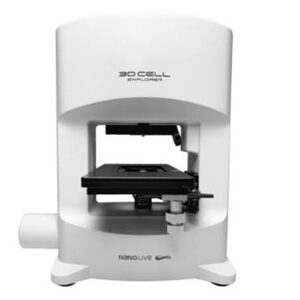
3D Cell Explorer
-
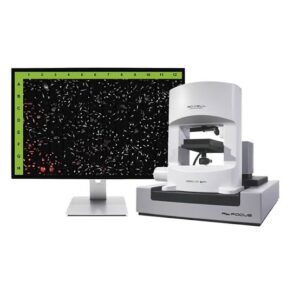
3D Cell Explorer 96focus DFT / FTC
-
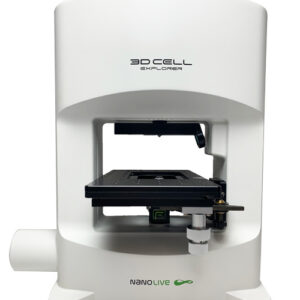
3D Cell Explorer-fluo DFT / FTC
-
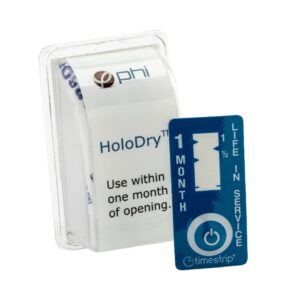
HoloDry
$600.00 Add to cart -
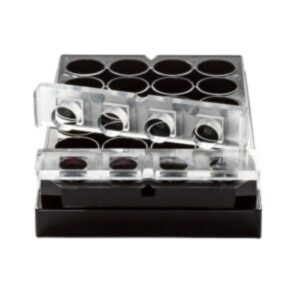
HoloLid™ for 24-Well Plate (ibidi)
$500.00 Add to cart -
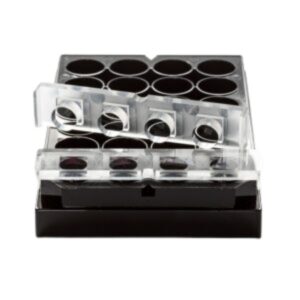
HoloLid™ for 24-Well Plate (Sarstedt)
$500.00 Add to cart -
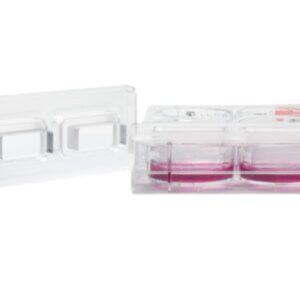
HoloLid™ for 6-Well Plate (Sarstedt)
$270.00 Add to cart -
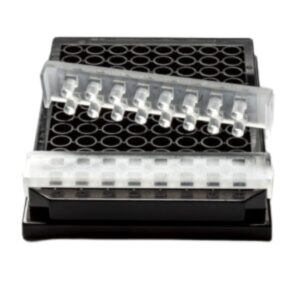
HoloLid™ for 96-Well Plate (Sarstedt)
$500.00 Add to cart -
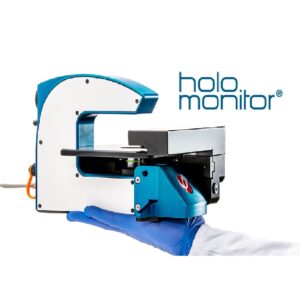
HoloMonitor – Live Cell Imaging System
-
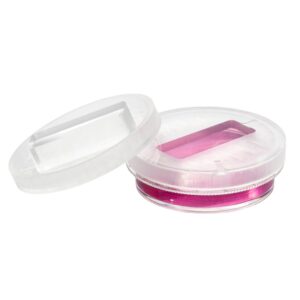
Petri Dish HoloLid™ (ibidi)
$300.00 Add to cart -
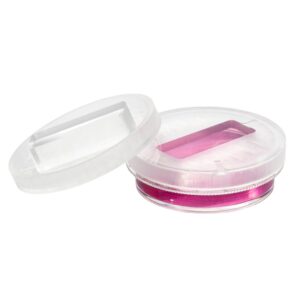
Petri Dish HoloLid™ (Sarstedt)
$300.00 Add to cart
Quantitative Phase Imaging (QPI) Solutions
Quantitative Phase Imaging (QPI) is a label-free live cell imaging technology that enables researchers to visualize and quantify cellular structures and dynamics based on optical phase shifts. Unlike fluorescence-based methods, QPI does not require dyes or labels, allowing long-term, non-invasive observation of living cells with minimal phototoxicity.
At Altium, we provide advanced quantitative phase imaging solutions designed for live cell analysis, drug discovery, high-content screening, and cellular biophysics research. Our systems deliver high-resolution, real-time, and quantitative data for studying cell morphology, growth, and dynamic biological processes.
What Is Quantitative Phase Imaging?
Quantitative Phase Imaging is an advanced optical microscopy technique that measures the phase shift of light passing through transparent biological samples, such as living cells. This phase shift is directly related to the cell’s refractive index and thickness, enabling precise quantitative analysis without staining or labeling.
QPI systems enable:
- Label-free live cell imaging
- Real-time measurement of cellular morphology
- Quantification of cell mass and density
- Time-lapse imaging of cellular dynamics
- High-contrast imaging of transparent specimens
- Non-invasive long-term cell observation
By converting optical phase information into quantitative biological data, QPI provides a powerful tool for modern cell biology.
How Quantitative Phase Imaging Works
Quantitative Phase Imaging measures the optical path length delay caused by a sample as light passes through it. These phase shifts are reconstructed into high-contrast images where each pixel represents physical properties of the cell.
Key measurable parameters include:
- Cell dry mass
- Refractive index distribution
- Cell thickness and volume
- Biomass changes over time
- Subcellular structural variations
This enables researchers to extract quantitative biological information directly from unlabeled living cells.
Advantages of Label-Free QPI Technologies
QPI offers several key advantages compared to conventional fluorescence or dye-based imaging methods:
- No need for fluorescent labeling or staining
- Reduced phototoxicity and photobleaching
- Long-term time-lapse compatibility
- Preservation of native cell physiology
- High sensitivity to subcellular changes
- Quantitative and reproducible measurements
These features make QPI ideal for sensitive live-cell experiments and longitudinal studies.
Applications of Quantitative Phase Imaging
QPI is widely used in biomedical research and pharmaceutical development, including:
- Cancer cell growth and morphology studies
- Drug screening and cytotoxicity testing
- Stem cell differentiation monitoring
- Cell cycle and proliferation analysis
- Neurobiology and cell signaling research
- Immunology and immune cell dynamics
- Biophysical characterization of living cells
Because it is label-free, QPI is especially useful for experiments requiring minimal perturbation of biological systems.
Time-Lapse and Dynamic Cell Analysis
QPI is particularly powerful for time-lapse imaging, enabling continuous observation of cellular processes over time.
Researchers can use QPI to:
- Track cell division and growth rates
- Monitor apoptosis and cell death pathways
- Analyze migration and motility
- Observe response to drug treatment in real time
- Study heterogeneous population behavior
This makes QPI a strong alternative to endpoint assays in drug discovery workflows.
Integration with High-Content Screening
Modern QPI systems can be integrated into high-content screening (HCS) platforms, enabling automated analysis of large cell populations.
Key capabilities include:
- Automated image acquisition
- AI-driven cell segmentation and classification
- High-throughput phenotypic screening
- Quantitative multi-parameter analysis
- Compatibility with multi-well plate systems
This allows researchers to scale experiments while maintaining high data quality.
QPI in Drug Discovery and Translational Research
Quantitative Phase Imaging plays an increasingly important role in pharmaceutical and translational research by enabling:
- Early-stage drug efficacy assessment
- Label-free toxicity screening
- Real-time monitoring of drug response
- Biomarker discovery at the single-cell level
- Phenotypic screening of therapeutic compounds
Its ability to generate quantitative, label-free data makes it highly valuable for predictive biological modeling.
Choosing a QPI Imaging System
Selecting the right quantitative phase imaging system depends on experimental requirements:
- Spatial and temporal resolution needs
- Live-cell compatibility and incubation control
- Throughput and automation level
- Compatibility with fluorescence or multimodal imaging
- Software and AI analysis capabilities
- Application focus (drug discovery, research, clinical studies)
Proper system selection ensures reliable and reproducible quantitative results.
Explore Quantitative Phase Imaging Solutions
Discover Altium’s Quantitative Phase Imaging systems designed for label-free live cell analysis, high-resolution time-lapse imaging, and quantitative cellular characterization. Our solutions help researchers uncover deep biological insights while preserving natural cell behavior.