


Showing 1–16 of 62 results
-
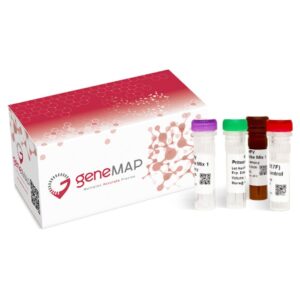
geneMAP™ 2019-nCoV (SARS-CoV-2) Detection Kit
$1,725.00 Add to cart -
geneMAP™ BCR-ABL1 (p190, p210, p230) Screening Kit
$2,160.70 Add to cart -
geneMAP™ BCR-ABL1 (p190, p210, p230) Screening Kit
$2,160.70 Add to cart -
geneMAP™ BCR-ABL1 p190 (mbcr) Detection Kit
$1,533.40 Add to cart -
geneMAP™ BCR-ABL1 p210(Mbcr) IS-MMR Detection Kit
$1,696.60 Add to cart -
geneMAP™ BCR-ABL1 p230 (μbcr) Detection Kit
$1,533.40 Add to cart -
geneMAP™ Borrelia Detection Kit
$381.00 Add to cart -
geneMAP™ BRCA1&2 Founder Mutations Detection Kit
$1,771.40 Add to cart -
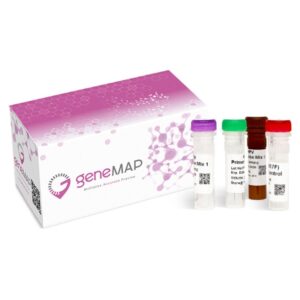
geneMAP™ c-KIT D816V Mutation Detection Kit
$496.40 Add to cart -
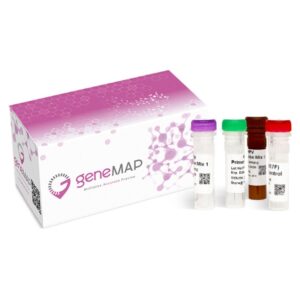
geneMAP™ CALR Mutation Screening Kit
$1,375.30 Add to cart -
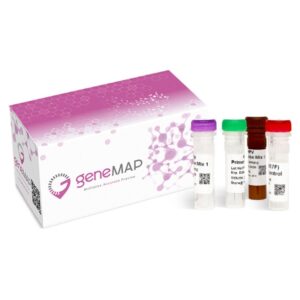
geneMAP™ CBFB-MYH11 Inv(16) Detection Kit
$821.10 Add to cart -
geneMAP™ CCHF Virus Detection Kit
$567.00 Add to cart -
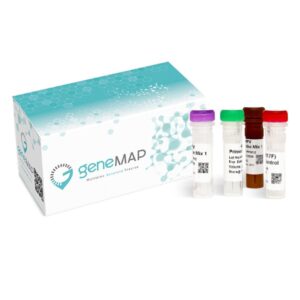
geneMAP™ Celiac (DQ2, DQ8, DR4) Detection Kit
$472.50 Add to cart -
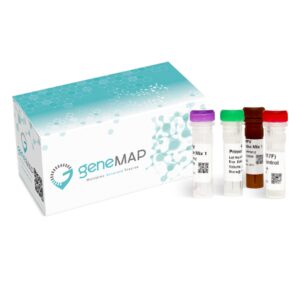
geneMAP™ DPYD Comprehensive Variant Detection Kit
$1,440.00 Add to cart -
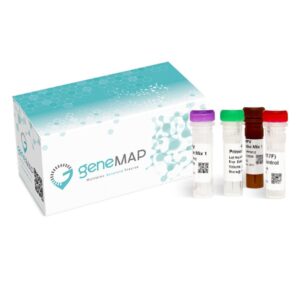
geneMAP™ DPYD Mutations Detection Kit
$945.00 Add to cart -
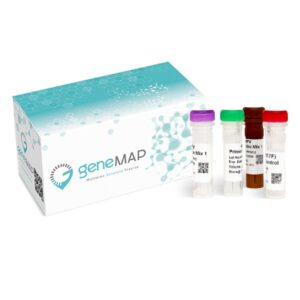
geneMAP™ FII Mutation Detection Kit
$247.50 Add to cart
Molecular Diagnostic Kits Solutions
Molecular diagnostic kits are essential tools in modern clinical research, enabling the detection, identification, and quantification of specific DNA, RNA, proteins, and other biomarkers associated with diseases. These advanced assay systems provide highly sensitive and specific results, making them a cornerstone of infectious disease testing, genetic analysis, oncology research, and precision medicine.
At Altium, we offer a comprehensive range of molecular diagnostic kits designed to support research laboratories, clinical diagnostics, pharmaceutical development, and translational medicine. Our solutions help researchers achieve fast, accurate, and reproducible results across a wide variety of molecular applications.
What Are Molecular Diagnostic Kits?
Molecular diagnostic kits are pre-validated assay systems used to detect molecular-level changes in biological samples. These kits typically rely on techniques such as PCR, qPCR, ELISA, sequencing, and hybridization-based methods to analyze genetic or protein-based biomarkers.
Molecular diagnostic kits are commonly used to:
- Detect infectious agents (viruses, bacteria, fungi)
- Identify genetic mutations and variants
- Measure gene expression levels
- Analyze disease-specific biomarkers
- Support companion diagnostics in drug development
By targeting molecular signatures, these kits enable earlier and more accurate disease detection compared to traditional diagnostic methods.
Key Technologies Used in Molecular Diagnostics
Modern molecular diagnostic workflows integrate several advanced technologies, including:
- Polymerase Chain Reaction (PCR)
- Quantitative PCR (qPCR)
- Reverse Transcription PCR (RT-PCR)
- Next-Generation Sequencing (NGS)
- ELISA-based immunoassays
- DNA/RNA hybridization assays
These technologies allow highly sensitive detection of low-abundance targets, improving diagnostic accuracy and clinical decision-making.
Applications of Molecular Diagnostic Kits
Molecular diagnostic kits are widely used across clinical and research environments, including:
- Infectious disease diagnostics
- Oncology and cancer biomarker detection
- Genetic disease screening
- Pharmacogenomics and drug response profiling
- Prenatal and neonatal testing
- Autoimmune disease research
- Companion diagnostics in targeted therapies
Their versatility makes them indispensable tools in both routine diagnostics and advanced biomedical research.
PCR and qPCR-Based Diagnostic Kits
PCR and qPCR-based molecular diagnostic kits are among the most widely used tools in the field due to their high sensitivity and specificity.
These kits enable:
- Rapid amplification of DNA/RNA targets
- Quantitative measurement of genetic material
- Detection of minimal pathogen loads
- Real-time monitoring of amplification processes
qPCR kits are especially valuable in infectious disease testing, where early and accurate detection is critical for patient management.
ELISA and Immuno-Based Diagnostic Kits
ELISA (Enzyme-Linked Immunosorbent Assay) kits are commonly used for protein and antigen detection in biological samples.
These kits allow researchers to:
- Quantify proteins, cytokines, and hormones
- Detect disease-associated biomarkers
- Perform high-throughput screening
- Support immunological research studies
ELISA-based molecular diagnostics are widely used in inflammation, infectious disease, and oncology research.
Advantages of Molecular Diagnostic Kits
Modern diagnostic kits provide significant advantages over traditional laboratory methods:
- High sensitivity and specificity
- Rapid turnaround time
- Standardized and reproducible results
- Reduced sample processing complexity
- Compatibility with automation platforms
- Scalability for high-throughput workflows
These benefits make molecular diagnostic kits a preferred choice for clinical laboratories and research institutions.
Role in Precision Medicine
Molecular diagnostic kits play a critical role in the advancement of precision medicine by enabling:
- Patient-specific genetic profiling
- Targeted therapy selection
- Disease risk assessment
- Treatment response monitoring
- Early disease detection
This allows clinicians and researchers to make more informed and personalized healthcare decisions.
Choosing the Right Molecular Diagnostic Kit
Selecting the appropriate diagnostic kit depends on several key factors:
- Type of biomarker (DNA, RNA, protein)
- Required sensitivity and specificity
- Sample type and volume
- Workflow compatibility (manual or automated)
- Regulatory and validation requirements
- Intended research or clinical application
Choosing the right kit ensures reliable results and optimal performance in downstream analysis.
Explore Molecular Diagnostic Kits
Discover Altium’s molecular diagnostic kits designed for high-performance detection, accurate biomarker analysis, and advanced research applications. Our solutions support a wide range of workflows in infectious disease testing, genetic analysis, oncology research, and precision diagnostics.