

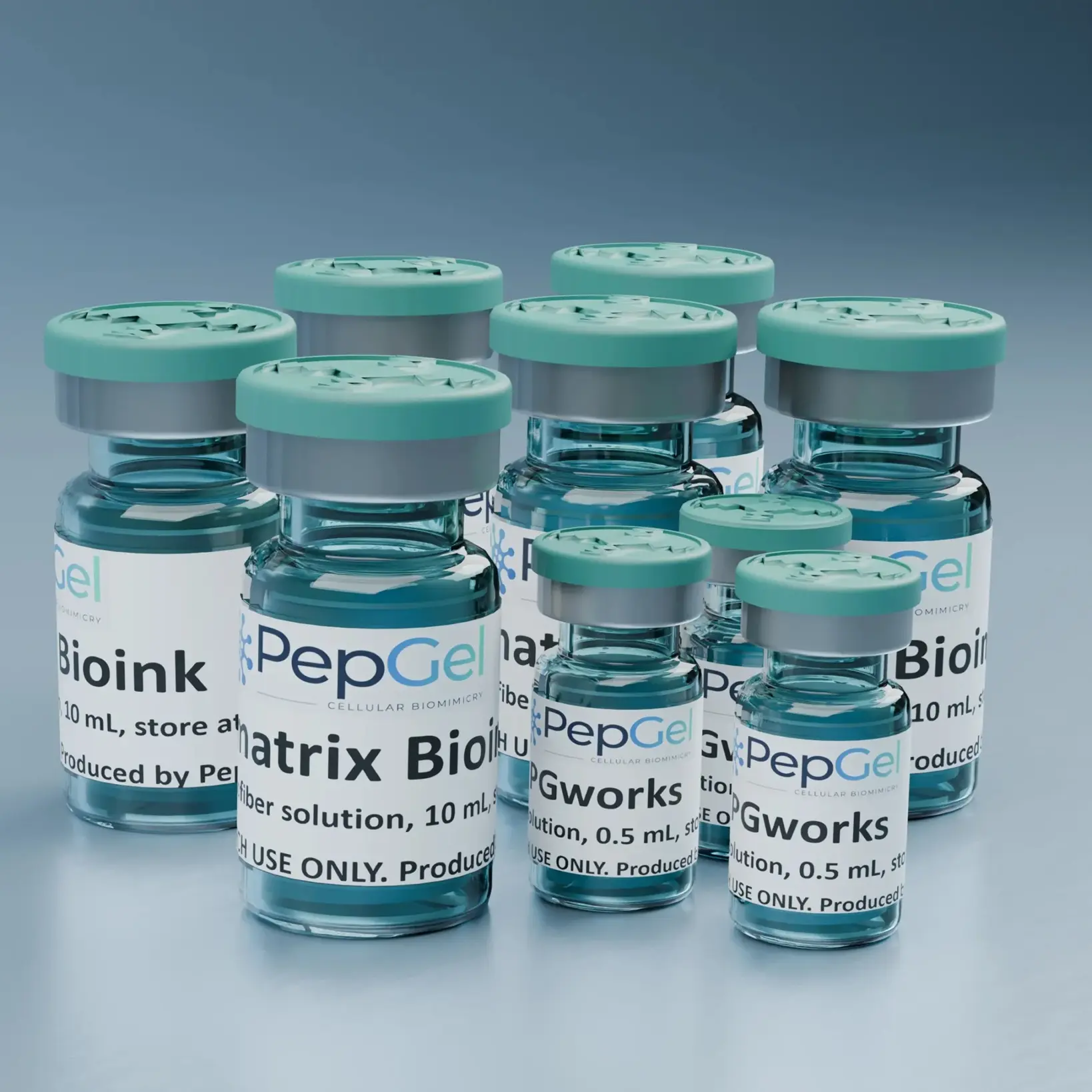
PGmatrix™ Bioink (sheet, dome printing)

$450.00
Description
The highly selected bioink for improving cytocompatibility, it can be used alone for bioprinting large sheet (<3 mm thick), dome, 2 mm cube.
PepGel™ PGmatrix™ Bioink is a versatile 3D bioprinting platform based on synthetic peptide nanofiber technology, designed to create physiologically relevant and highly cytocompatible microenvironments. By mimicking the native extracellular matrix (ECM), it enables precise printing of living cells while preserving their viability, function, and ability to organize in 3D structures.
Suitable for a wide range of bioprinting techniques, including extrusion, inkjet, digital light processing (DLP), and microfluidics, PGmatrix™ Bioink supports applications from basic research to advanced tissue engineering and regenerative medicine. Its flexible formulation allows both standalone use and integration with structural bioinks for complex, multi-material constructs.
Related products

Product description
The highly selected bioink for improving cytocompatibility, it can be used alone for bioprinting large sheet (<3 mm thick), dome, 2 mm cube.
PepGel™ PGmatrix™ Bioink is a versatile 3D bioprinting platform based on synthetic peptide nanofiber technology, designed to create physiologically relevant and highly cytocompatible microenvironments. By mimicking the native extracellular matrix (ECM), it enables precise printing of living cells while preserving their viability, function, and ability to organize in 3D structures.
Suitable for a wide range of bioprinting techniques, including extrusion, inkjet, digital light processing (DLP), and microfluidics, PGmatrix™ Bioink supports applications from basic research to advanced tissue engineering and regenerative medicine. Its flexible formulation allows both standalone use and integration with structural bioinks for complex, multi-material constructs.
Features
- Physiologically relevant bioink
Mimics native ECM to support natural cell growth, migration, and function - High cytocompatibility
Preserves cell viability during and after the bioprinting process - Broad bioprinting compatibility
Suitable for extrusion, inkjet, DLP, and microfluidic bioprinting - Flexible application formats
Enables printing of both large-scale sheets and microscale constructs - Standalone or composite use
Can be used alone or combined with structural bioinks (e.g. PEG, GelMA) for enhanced mechanical properties - No harsh processing conditions
Operates at physiological temperature and neutral pH without UV or chemical crosslinking - Supports advanced workflows
Enables direct printing, post-printing cell infusion, and hybrid scaffold fabrication - Two-component system
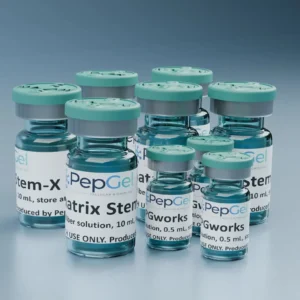
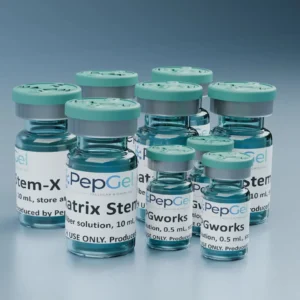
Includes PGmatrix nanofiber solution and PGworks trigger for controlled hydrogel formation - Customizable formulations
Adaptable to specific cell types, printing methods, and application needs