


Showing the single result
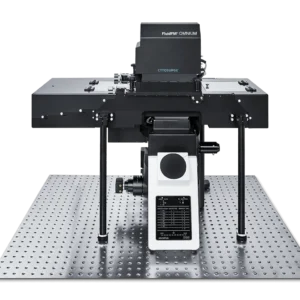
Single Cell Proteomics Solutions
Single cell proteomics enables the comprehensive analysis of proteins at the individual cell level, providing unprecedented insights into cellular heterogeneity, disease mechanisms, and functional biology. Unlike bulk proteomics, which averages signals across millions of cells, single cell proteomics reveals the unique protein expression profiles of individual cells.
At Altium, we provide advanced single cell proteomics solutions designed for life science research, cancer biology, immunology, drug discovery, and precision medicine applications. Our technologies enable high-sensitivity protein detection, quantitative analysis, and deep cellular profiling at single-cell resolution.
What Is Single Cell Proteomics?
Single cell proteomics is the large-scale study of proteins expressed within individual cells. It focuses on understanding how protein abundance, modifications, and interactions vary between cells within the same population.
Single cell proteomics enables researchers to:
- Measure protein expression at single-cell resolution
- Identify rare cell populations
- Analyze cellular heterogeneity
- Study signaling pathways in individual cells
- Link genotype to phenotype at the protein level
This approach provides a deeper understanding of biological systems compared to traditional bulk proteomics methods.
Why Single Cell Proteomics Matters
Cell populations that appear identical at the genomic level can exhibit significant differences at the proteomic level. Single cell proteomics helps uncover this hidden variability.
Key benefits include:
- Detection of rare or low-abundance cell states
- Improved understanding of disease progression
- Identification of therapeutic targets
- Enhanced biomarker discovery
- Better characterization of tumor heterogeneity
This makes it especially important in oncology, immunology, and neurobiology research.
Technologies Used in Single Cell Proteomics
Modern single cell proteomics workflows integrate multiple advanced technologies, including:
- Mass spectrometry (MS)-based proteomics
- Tandem mass tag (TMT) labeling
- Microfluidic single-cell isolation
- NanoLC-MS/MS systems
- Immunoassay-based protein detection
- High-sensitivity antibody arrays
These technologies enable precise quantification of thousands of proteins from individual cells.
Single Cell Isolation and Sample Preparation
Accurate single cell proteomics depends heavily on efficient isolation and preparation of individual cells.
Common approaches include:
- Microfluidic droplet systems
- Fluorescence-activated cell sorting (FACS)
- Laser capture microdissection
- Microwell-based cell capture platforms
These methods ensure high viability and purity of single-cell samples for downstream analysis.
Applications of Single Cell Proteomics
Single cell proteomics is widely used across biomedical and pharmaceutical research:
- Cancer heterogeneity and tumor microenvironment studies
- Immune cell profiling and immunotherapy research
- Neurodegenerative disease mechanisms
- Stem cell differentiation analysis
- Drug response and resistance studies
- Biomarker discovery and validation
- Precision medicine development
These applications help bridge the gap between molecular biology and clinical translation.
Advantages Over Bulk Proteomics
Compared to traditional bulk proteomics, single cell approaches provide:
- Higher resolution of biological variability
- Detection of rare cell subpopulations
- More accurate disease modeling
- Improved drug target identification
- Deeper understanding of signaling networks
This makes single cell proteomics a critical tool for next-generation biomedical research.
Data Analysis in Single Cell Proteomics
Single cell proteomics generates complex datasets that require advanced computational analysis.
Key analysis workflows include:
- Protein quantification and normalization
- Clustering of cell populations
- Pathway and network analysis
- Differential protein expression analysis
- Machine learning-based cell classification
These computational tools help translate raw proteomic data into actionable biological insights.
Role in Drug Discovery and Precision Medicine
Single cell proteomics is increasingly used in pharmaceutical research to:
- Identify novel drug targets
- Understand mechanisms of drug resistance
- Evaluate therapeutic response at the cellular level
- Stratify patient populations
- Support biomarker-driven clinical trials
This improves both drug development efficiency and clinical success rates.
Choosing a Single Cell Proteomics Platform
Selecting the right system depends on several factors:
- Sensitivity and detection limits
- Number of proteins analyzed per cell
- Throughput requirements
- Isolation method compatibility
- Downstream data analysis tools
- Integration with multi-omics workflows
The right platform enables scalable and reproducible single-cell protein analysis.
Explore Single Cell Proteomics Solutions
Discover Altium’s single cell proteomics technologies designed for high-resolution protein analysis, cellular heterogeneity studies, and advanced biomedical research. Our solutions enable researchers to uncover deep functional insights at the single-cell level and accelerate discoveries in precision medicine.