


Showing the single result
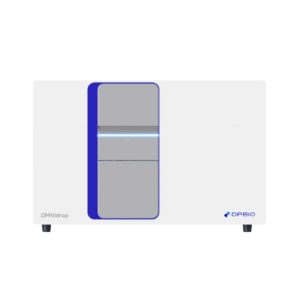
Droplet-Based Microfluidics Solutions
Droplet-based microfluidics is an advanced technology that enables precise manipulation of fluids at the microscale by generating and controlling discrete droplets in an immiscible carrier phase. This approach allows researchers to perform high-throughput experiments with minimal reagent consumption, making it a powerful platform for single-cell analysis, diagnostics, drug discovery, and biomolecular screening.
At Altium, we provide advanced droplet-based microfluidics solutions designed for life science research, single-cell biology, antibody discovery, genomics, and high-throughput screening applications. Our platforms enable highly controlled droplet generation, isolation, and analysis for next-generation biological workflows.
What Is Droplet-Based Microfluidics?
Droplet-based microfluidics is a branch of microfluidics where aqueous samples are compartmentalized into tiny droplets suspended in an immiscible oil phase. Each droplet acts as an independent microreactor, allowing thousands to millions of parallel experiments to be performed simultaneously.
This technology enables:
- High-throughput single-cell encapsulation
- Precise reagent compartmentalization
- Controlled reaction environments
- Miniaturized biochemical assays
- Parallelized biological screening
Each droplet functions as an isolated reaction chamber, dramatically increasing experimental scalability and efficiency.
How Droplet Microfluidics Works
Droplet microfluidic systems use microchannels to combine aqueous and oil phases under controlled flow conditions. As fluids intersect, uniform droplets are formed and transported through the system for downstream processing or analysis.
Key processes include:
- Droplet generation using flow-focusing or T-junction geometries
- Encapsulation of cells, beads, or reagents
- Controlled droplet merging or splitting
- On-chip incubation and reaction monitoring
- Sorting and downstream analysis
This precise control enables highly reproducible and scalable experimental workflows.
Advantages of Droplet-Based Microfluidics
Droplet microfluidics offers significant advantages over conventional bulk experimental methods:
- Ultra-high-throughput screening capabilities
- Minimal reagent and sample consumption
- High precision and reproducibility
- Single-cell resolution analysis
- Reduced cross-contamination risk
- Parallelized experimental design
These advantages make it a core technology for modern biomedical research and industrial biotechnology.
Applications of Droplet Microfluidics
Droplet-based microfluidics is widely used across life science and clinical research fields:
- Single-cell analysis and sequencing
- Antibody discovery and screening
- Enzyme evolution and protein engineering
- Digital PCR (dPCR) applications
- Drug discovery and compound screening
- Cell-based functional assays
- Genomics and transcriptomics workflows
Its versatility makes it a key enabling technology for next-generation biological research.
Droplet Microfluidics in Single-Cell Analysis
One of the most powerful applications of droplet microfluidics is single-cell analysis. Individual cells can be encapsulated in droplets, enabling precise functional and molecular studies.
This allows researchers to:
- Analyze gene expression at single-cell level
- Study cellular heterogeneity
- Perform high-throughput screening of rare cells
- Link genotype to phenotype in individual cells
- Identify rare functional cell populations
This capability is especially important in immunology, oncology, and stem cell research.
Role in Antibody Discovery
Droplet microfluidics has transformed antibody discovery workflows by enabling rapid screening of millions of antibody-secreting cells.
Key benefits include:
- High-throughput antibody screening
- Rapid identification of antigen-specific clones
- Single B-cell analysis
- Functional antibody characterization in droplets
- Reduced time from discovery to validation
This significantly accelerates therapeutic antibody development pipelines.
Applications in Genomics and Molecular Biology
Droplet-based systems are widely used in molecular biology workflows, including:
- Digital PCR (absolute nucleic acid quantification)
- Single-cell RNA sequencing (scRNA-seq)
- Library preparation for NGS
- Gene expression profiling
- Mutation detection and analysis
These applications provide highly sensitive and quantitative molecular data.
Advantages in Drug Discovery
Droplet microfluidics enhances drug discovery by enabling:
- High-throughput compound screening
- Functional cell-based assays
- Dose-response analysis at microscale
- Rapid identification of lead compounds
- Reduced reagent and cost requirements
This improves both efficiency and scalability in pharmaceutical research.
Key System Considerations
Selecting a droplet microfluidics platform depends on several factors:
- Droplet size uniformity and control
- Throughput and generation rate
- Compatibility with biological samples
- Downstream analysis integration
- Automation and software support
- Application-specific flexibility
Proper system design ensures reliable and reproducible experimental outcomes.
Explore Droplet-Based Microfluidics Solutions
Discover Altium’s droplet-based microfluidics technologies designed for single-cell analysis, high-throughput screening, antibody discovery, and advanced molecular biology applications. Our systems enable scalable, precise, and efficient experimental workflows for next-generation life science research.